All-on-4 Dental Implants in Spain, The Honest Guide for Spanish Patients Considering Hyderabad
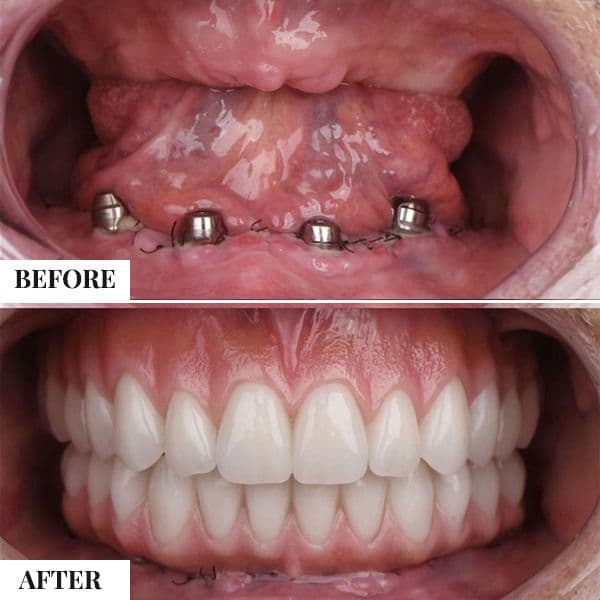
- All-on-4 is a full-arch dental implant protocol in which four implants per jaw support a fixed prosthesis of 10 to 12 teeth.
It was developed and published in the early 2000s by Dr.




What All-on-4 Actually Is <a id="what-a4-is"></a>
All-on-4 is a full-arch dental implant protocol in which four implants per jaw support a fixed prosthesis of 10 to 12 teeth. It was developed and published in the early 2000s by Dr. Paulo Maló in Portugal, and over the subsequent two decades it has become the most widely practised full-arch rehabilitation protocol in the world. Its acceptance in European and North American specialist dentistry is broad and well-supported by long-term clinical evidence, 10-year fixture survival rates consistently above 94% in meta-analyses.
Four implants is the minimum. For some patients, bruxers, patients with natural opposing dentition, patients needing molar-to-molar prosthetic span, four is not enough, and All-on-6 is indicated. For many patients, four is correct. This blog is about four. See our Spain All-on-6 blog for the other decision.
Questions about this procedure?
Who Is and Is Not a Candidate <a id="candidates"></a>
You are likely a candidate for All-on-4 if:
- You have a failing dentition on one or both arches, advanced periodontitis, multiple endodontically failed teeth, or generalised hopeless prognosis.
- You are fully edentulous already and wearing a complete denture you dislike.
- You have adequate anterior bone, roughly 8 mm of vertical height in the premaxilla or anterior mandible, to anchor the tilted posterior fixtures.
- You do not have severe posterior maxillary atrophy (in which case zygomatic is often a better answer).
- Your medical history permits surgery under IV sedation, no uncontrolled diabetes (HbA1c ≤ 7.5%), no active chemotherapy, no bisphosphonate use associated with osteonecrosis risk, and your cardiovascular status has been cleared by your Spanish GP or cardiologist.
- You are a non-smoker, or you can pause smoking 4 weeks pre-op and 12 weeks post-op.
- You are a severe bruxer with natural opposing teeth, All-on-6 distributes load better.
- You have severe posterior atrophy in both jaws, zygomatic may be indicated.
- Your remaining natural teeth are salvageable, crown-and-bridge rehabilitation may be a better answer.
- Medical contraindications apply.
- You cannot commit to post-op follow-up and long-term maintenance.
We assess every patient against these criteria before accepting the case. We decline roughly 14% of inbound Spanish All-on-4 enquiries, usually redirecting to All-on-6, zygomatic, or natural-dentition rehabilitation.
Ready to discuss your options?
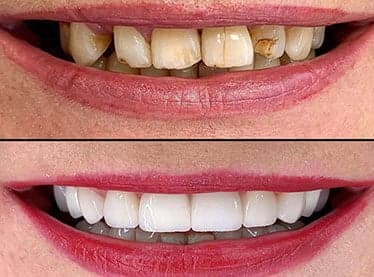
The Maló Protocol and Why We Follow It <a id="malo-protocol"></a>
We follow the published Maló Protocol as the starting framework, with modifications based on modern digital workflow and our own clinical data.
- Two anterior implants placed vertically, bilateral to the midline, typically in the lateral incisor or canine position
- Two posterior implants tilted 30 to 45 degrees distally, exiting in the first or second premolar position
- Minimum insertion torque of 35 Ncm for immediate loading (below this, we delay load)
- Immediate provisional prosthesis placed within 24 hours where torque permits
- Definitive prosthesis placed after 3 to 6 months of osseointegration and soft-tissue stabilisation
Our modifications:
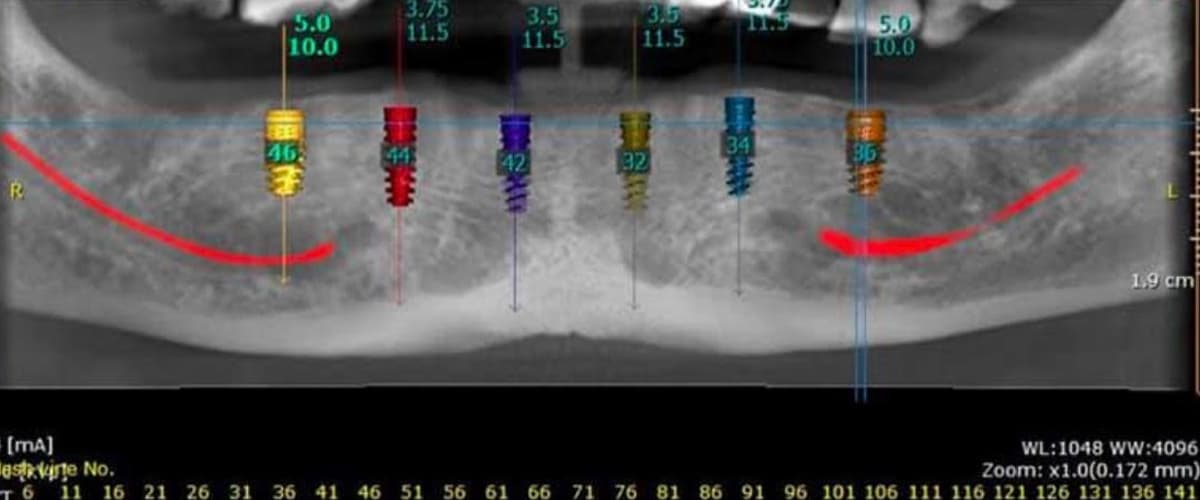
- Digital planning through coDiagnostiX or Nobel Clinician, fixture positions planned against the planned prosthesis, not arbitrary anatomical landmarks
- Guided surgery using a static 3D-printed guide for 82% of our All-on-4 cases; X-Guide dynamic navigation for restricted mouth opening or aesthetic zone concerns
- Zirconia framework by default for the definitive prosthesis, not acrylic-resin-bar (which Maló originally used and which remains standard in some clinics but which we consider a compromise on long-term wear)
- Pink composite gingival aesthetics individualised to the patient's lip line and soft-tissue colour
Curious about costs and timelines?
Step-by-Step: How We Deliver All-on-4 <a id="step-by-step"></a>
Pre-travel phase (remote). Video consultation with Dr. Kiran Madhav in English with Spanish support from Anjali Reddy. Financial paperwork in EUR. Pre-treatment CBCT either at your Spanish dentist's clinic (sent to us in DICOM) or on arrival.
Day 1. Arrive at RGIA Hyderabad. Private driver to your hotel (Taj Krishna, Park Hyatt, ITC Kohenur, Novotel HITEC City, Radisson Blu, Marriott Executive Apartments, Hyatt Place, or Courtyard Marriott). Rest.
Day 2. Clinical consultation, CBCT (if not pre-sent), intraoral scan (Medit i700 or Primescan), facial photography, bloods.
Day 3. Planning day. Our team, surgeon, prosthodontist, dental technician, meets to agree the plan. Digital wax-up designed. Surgical guide fabricated in-house.
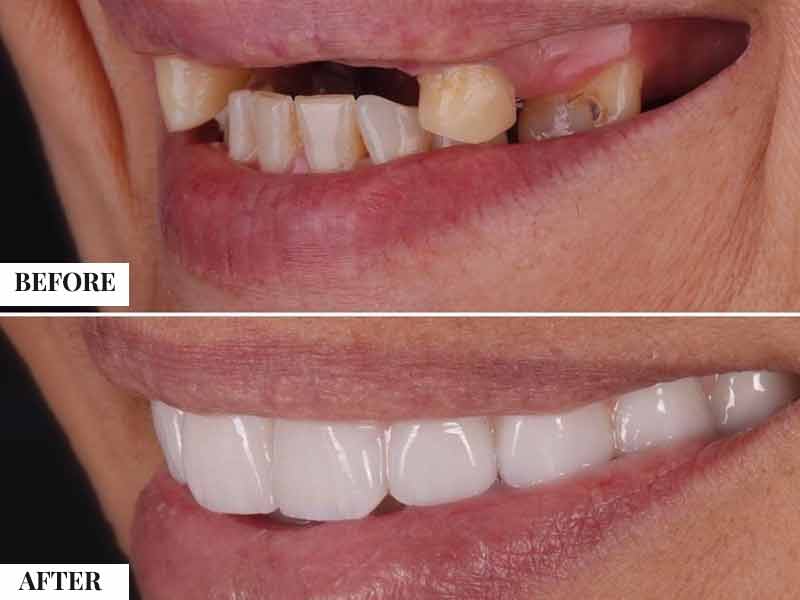
Day 4. Surgery under IV sedation. Remaining teeth extracted where indicated. Ridge modification for prosthetic space. Four implants placed through the guide at planned positions and angulations. Insertion torque verified. Immediate milled PMMA provisional fitted within 24 hours where torque is ≥35 Ncm. If torque is below threshold, healing abutments placed and load delayed, this is the honest fallback, and we tell you at placement which one applies.
Day 5-7. Post-op reviews. Bite adjustment. Photographs. Early healing check.
Day 10-14. You fly home. Soft diet for 3 months. Follow-up video consults at weeks 2, 4, 8, and 12 with Anjali Reddy coordinating.
Month 4-6. Return trip for definitive prosthesis. 5 to 7 days in Hyderabad. Final impressions taken on implant level. Zirconia framework milled and try-in conducted. Bite and aesthetics finalised. Definitive prosthesis torqued into place. Final photography and record.
Years 1-10. Annual review, ideally with your Spanish dentist for routine hygiene, and video check-in with our team at 12, 24, and 60 months. Re-torque of prosthetic screws at 12 months and 5 years.
Want a personalised treatment plan?
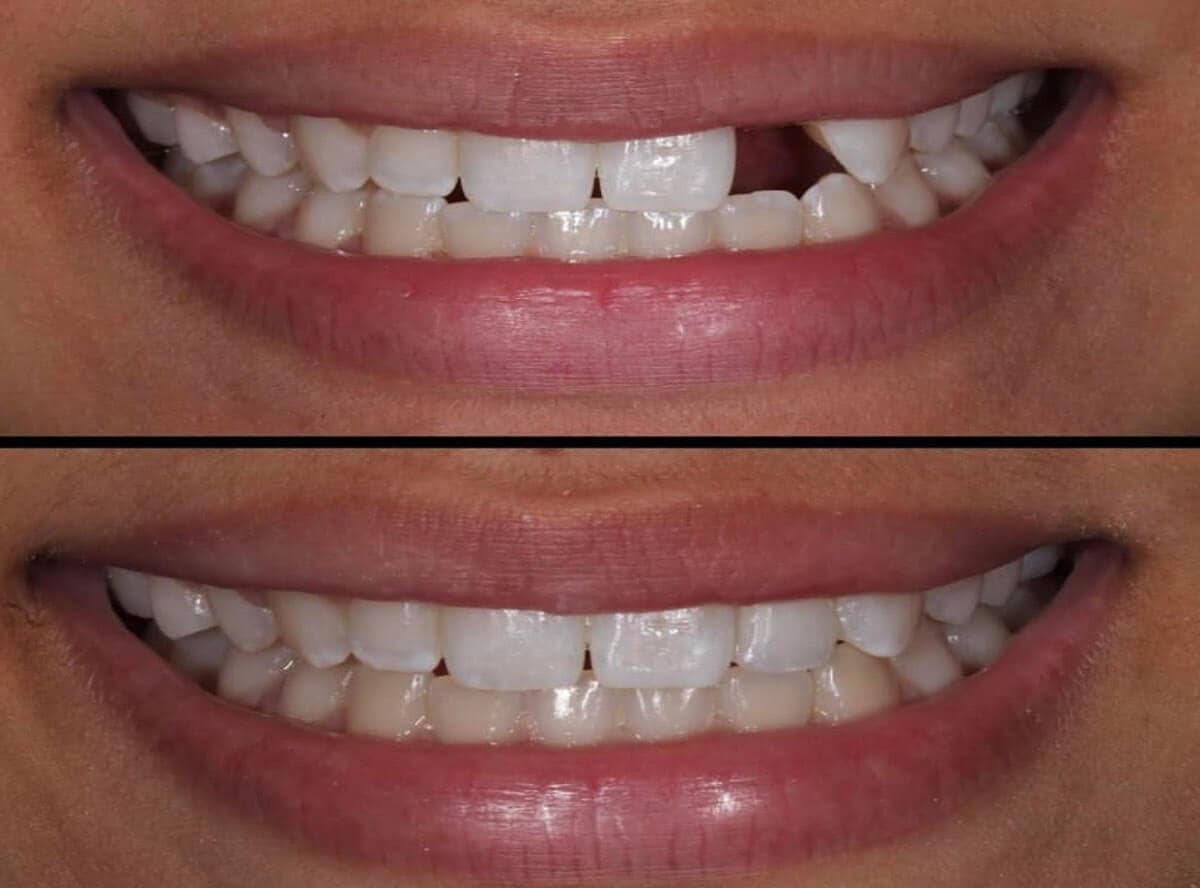
Materials: Fixtures, Framework, and Teeth <a id="materials"></a>
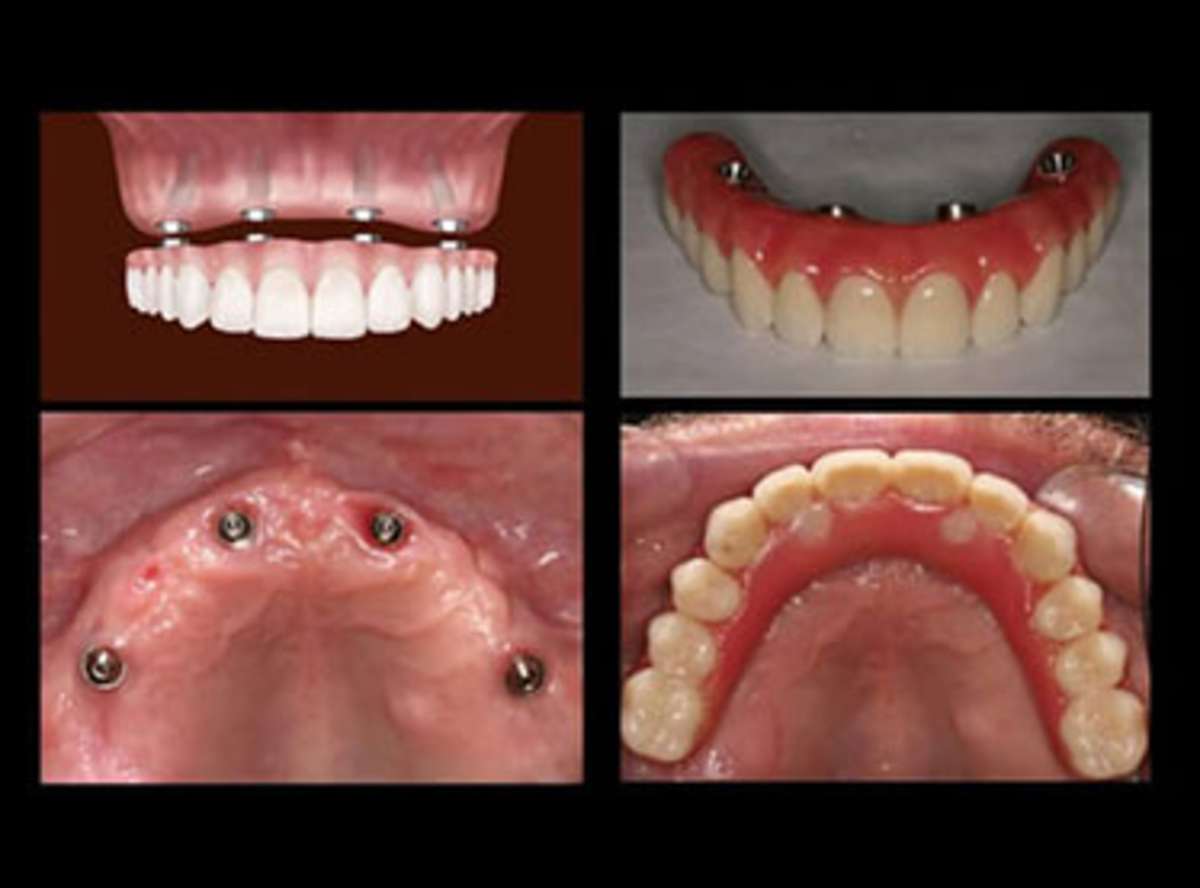
Implant fixtures. Straumann SLActive or Nobel Biocare. Choice determined by bone density, anatomy, and planned loading protocol. Lifetime manufacturer warranty on fixtures against mechanical failure.
Screws. Titanium prosthetic screws, replaceable, re-torqued at 12 months and 5 years as standard maintenance.
Questions about this procedure?
What This Costs in EUR <a id="cost-in-eur"></a>
Inclusive of: all diagnostic workup, all surgical and prosthetic procedures, all materials (Straumann or Nobel implants, zirconia definitive, PMMA provisional), IV sedation and anaesthetist, hotel for 10 nights, airport transfers.
Insurance notes for Spanish patients: Sistema Nacional de Salud does not cover full-arch implant dentistry. Private insurers, Sanitas, Adeslas, DKV, Mapfre Salud, Asisa, provide partial dental coverage with implant allowances ranging from EUR 300 to EUR 800 per implant (not per case). We supply itemised EUR and INR receipts plus a clinical summary in Spanish for submission.
| All-on-4 Item | Spanish Private-Specialist Quote (EUR) | Stunning Dentistry Fee (EUR) |
|---|---|---|
| All-on-4, single arch, all-inclusive | 18,000 – 28,000 | 8,500 – 12,000 |
| All-on-4, both arches, all-inclusive | 32,000 – 52,000 | 15,500 – 22,000 |
| All-on-6 upgrade from All-on-4 | +4,000 – 7,000 | +2,500 – 4,000 |
| Zygomatic conversion if atrophy requires | +15,000 – 25,000 | +9,000 – 13,000 |
| Extractions of failing remaining teeth | 100 – 200 per tooth | Included |
| CBCT + digital planning + surgical guide | 2,000 – 4,000 | Included |
| IV sedation and anaesthetist | 800 – 1,500 | Included |
| Milled PMMA provisional | 2,500 – 4,500 | Included |
| Monolithic zirconia definitive prosthesis | 6,000 – 10,000 | Included |
| Three post-op reviews + 12-month follow-up | 400 – 800 | Included |
Ready to discuss your options?
For Spanish Patients: Travel, Recovery, Home Dentist <a id="spanish-logistics"></a>
Flights from Spanish cities. Iberia, Lufthansa, Turkish Airlines, Qatar Airways, and Etihad operate from Madrid (MAD), Barcelona (BCN), Valencia (VLC), Seville (SVQ), Bilbao (BIO), Málaga (AGP), Zaragoza (ZAZ), Palma (PMI) to Hyderabad (HYD) with one connection in Frankfurt, Istanbul, Doha, or Abu Dhabi. Flight time typically 12-14 hours plus layover.
Home dentist handover. Full record, CBCT, IOS, operative note, biomaterial batches, prosthesis design, photographs, transferred to your Madrid/Barcelona/Valencia/Seville/Bilbao/Málaga/Zaragoza/Palma dentist on your written consent. Protocol document in Spanish provided for ongoing maintenance.
Curious about costs and timelines?
Aftercare, Warranty, and the 10-Year View <a id="aftercare-warranty"></a>
Weeks 1-2: soft diet, chlorhexidine rinse, no brushing the surgical sites, analgesics as prescribed.
Warranty categories: A (8.7% of all cases, free re-do at our cost), B (2.4% partial cost-share), C (1.5% outside formal warranty but clinically addressed), D (0.3% arbitration). Escalation chain documented in our FMR pillar.
Want a personalised treatment plan?
What Goes Wrong (and Who Pays) <a id="what-goes-wrong"></a>
Early implant failure (first 3 months). Published rates 1-3%. Our rate 2.1%. Covered by Category A, free replacement including return travel within the warranty window.
Prosthesis wear / chipping. Over 5-10 years, some wear is expected; significant chipping is covered under Category A if within warranty window.
Questions about this procedure?
Specialist-only treatment planning
- Remote file review before travel
- Evidence-led treatment checkpoints
No waiting list for eligible cases
- Remote file review before travel
- Evidence-led treatment checkpoints
Trip coordinated with care timeline
- Remote file review before travel
- Evidence-led treatment checkpoints
Our Partners




Why Us
See your new smile instantly!
This tool will help you understand potential structural and aesthetic changes before finalizing treatment decisions.