CBCT-Guided Implant Planning in Spain, Why We Scan, Read, and Re-Read Before We Drill
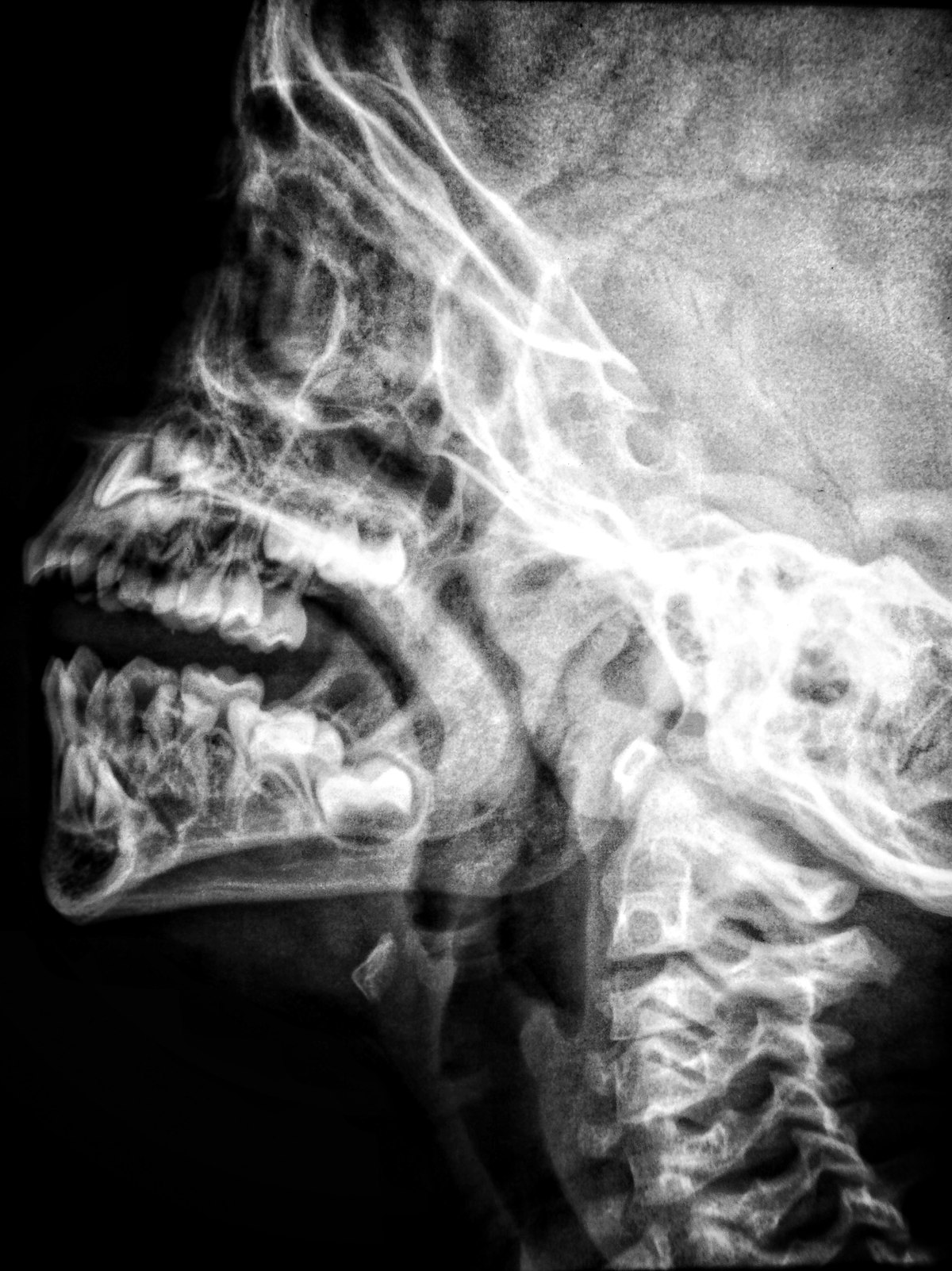
- A panoramic radiograph (ortopantomografía) is a two-dimensional image.
It compresses a curved three-dimensional arch into a flat sheet and, in doing so, distorts magnification, overlaps anatomy, and hides the buccolingual dimension entirely.









Why a CBCT, and Why Not a Panoramic <a id="why-cbct"></a>
A panoramic radiograph (ortopantomografía) is a two-dimensional image. It compresses a curved three-dimensional arch into a flat sheet and, in doing so, distorts magnification, overlaps anatomy, and hides the buccolingual dimension entirely. For a single-tooth filling or a crown margin check it is perfectly adequate. For an implant, where a 2 mm error in any direction can mean the difference between a 10-year fixture and a lingual plate perforation, a sinus perforation, or a mental nerve injury, it is not.
At Stunning Dentistry we do not place an implant without a CBCT. Not one. The Spanish patients who arrive with a panoramic-only treatment plan from another provider are re-planned, properly, before surgery.
Questions about this procedure?
What a CBCT Actually Shows Us <a id="what-it-shows"></a>
Our scanner is a Carestream CS 9600. It captures the maxillofacial complex at voxel sizes ranging from 75 μm (high-resolution implant planning mode) to 150 μm (standard full-arch mode) to 300 μm (low-dose screening mode). Every case intended for implant surgery is scanned at 150 μm or finer. Zygomatic and nerve-proximity cases are scanned at 75 μm.
Prosthetically driven planning anatomy. The relationship between the planned tooth position (from the intraoral scan and smile analysis) and the available bone. This is the core question of modern implantology: where does the crown need to be, and can we put a fixture under that crown? If not, what do we do, graft, tilt, shift to All-on-4, or consider zygomatic? The CBCT is the only tool that answers this honestly.
Ready to discuss your options?
The Three-Clinician Read Protocol <a id="three-clinician-read"></a>
Every CBCT at Stunning Dentistry is read, independently, by three clinicians before a surgical plan is signed off.
This protocol adds 3-5 days to the pre-surgical workflow. It is why we do not offer same-week consultation-to-surgery for implant cases, and why we decline "walk-in immediate-load" requests from Spanish patients in a hurry. The scan, the reads, the planning conference, and the guide fabrication all take time. We use that time because shortcuts here cost 10 years of prosthesis life.
Curious about costs and timelines?
Radiation Dose in Real-Life Context <a id="radiation"></a>
A full-arch CBCT at 150 μm delivers an effective dose of approximately 40-80 μSv, depending on field of view and scan parameters. For context:
- A transatlantic flight from Madrid to New York delivers roughly 50-80 μSv of cosmic background radiation per leg.
- A standard chest X-ray: 100 μSv.
- Annual natural background radiation in Spain: approximately 2,400 μSv.
- An abdominal CT scan: 8,000-10,000 μSv.
We scan only when clinically indicated. We use the smallest field of view that covers the anatomy in question. We do not repeat scans without reason. For patients under 16 or patients who have had recent head-and-neck imaging elsewhere, we review the existing scans before defaulting to a fresh one.
Want a personalised treatment plan?
Four Real Spanish Cases Where the CBCT Changed the Plan <a id="four-cases"></a>
Every month the CBCT re-writes a plan we would otherwise have got wrong. Four recent examples from our Spanish patient cohort, anonymised:
Case 4, Bilbao, 52-year-old, upper central incisor replacement. Home clinic had planned a straight immediate implant following extraction. Our CBCT showed the labial plate was 0.6 mm thick, below the 1 mm threshold for predictable immediate implant placement without grafting. We revised the plan to delayed placement with simultaneous GBR, sacrificing 4 months of treatment time to preserve long-term aesthetic stability. Two-year follow-up: labial plate intact, gingival margin stable, no grey show-through.
Questions about this procedure?
From Scan to Surgical Guide <a id="scan-to-guide"></a>
Once the three-clinician read and planning conference are complete:
Step 5. On surgical day, the guide seats over the patient dentition (or mucosa, or pins), the planned drill sequence is executed exactly as rehearsed virtually, and the fixture is placed. The insertion torque at seating is recorded, this is the data point that drives the immediate-vs-delayed load decision.
Ready to discuss your options?
What This Costs in EUR <a id="cost-in-eur"></a>
Inclusive of: CBCT at appropriate resolution, intraoral scan, radiologist report, three-clinician read, planning conference, surgical guide design and fabrication, DICOM export to your Spanish dentist on request.
Insurance for Spanish patients: Sanitas, Adeslas, DKV, Mapfre Salud, and Asisa typically reimburse diagnostic imaging at domestic private rates. CBCT is usually an itemised covered line in most plans; we supply EUR itemised invoices and Spanish-language clinical summaries on request. IRPF medical expense documentation (Modelo 104 supporting records) provided for patients in autonomous communities where medical deductions apply.
| CBCT-Guided Planning Item | Spanish Private-Specialist Quote (EUR) | Stunning Dentistry Fee (EUR) |
|---|---|---|
| CBCT scan, full arch, 150 μm | 180 - 350 | Included in treatment |
| CBCT scan, 75 μm high-res (zygomatic, nerve-proximity) | 300 - 500 | Included |
| Intraoral scan (Medit/Primescan) | 120 - 250 | Included |
| Three-clinician read and planning conference | N/A, not offered as itemised service | Included |
| Digital surgical guide (tooth-supported) | 400 - 800 | Included |
| Digital surgical guide (full-arch bone/mucosa-supported) | 800 - 1,500 | Included |
| Prosthetically driven fixture planning | Usually billed as part of larger treatment | Included |
| DICOM export to home dentist on consent | 50 - 150 | Included |
Curious about costs and timelines?
For Spanish Patients: Option A vs Option B Scan Logistics <a id="spanish-logistics"></a>
We offer two paths for the diagnostic phase:
Flights on Iberia, Lufthansa, Turkish, Qatar, or Etihad from Madrid (MAD), Barcelona (BCN), Valencia (VLC), Seville (SVQ), Bilbao (BIO), Málaga (AGP), Zaragoza (ZAZ), or Palma (PMI) via one connection. Hotel stays booked at Taj Krishna, Park Hyatt, ITC Kohenur, Novotel HITEC City, Radisson Blu, Marriott Executive Apartments, Hyatt Place, or Courtyard Marriott near the clinic.
Want a personalised treatment plan?
Limitations of CBCT and What We Do About Them <a id="limitations"></a>
Metal artefact. Existing metal crowns, posts, or old implants scatter the beam and produce star-burst artefacts that obscure the tissue around them. We use metal-artefact reduction algorithms (Carestream's MAR software) and, when necessary, plan around affected regions with additional periapical imaging.
Interpretation is operator-dependent. This is the single biggest risk in CBCT. A high-resolution scan read poorly is more dangerous than no scan at all, because it produces false confidence. Our three-clinician read protocol is specifically designed to catch interpretation errors.
Questions about this procedure?
Specialist-only treatment planning
- Remote file review before travel
- Evidence-led treatment checkpoints
No waiting list for eligible cases
- Remote file review before travel
- Evidence-led treatment checkpoints
Trip coordinated with care timeline
- Remote file review before travel
- Evidence-led treatment checkpoints
Our Partners








Why Us
See your new smile instantly!
This tool will help you understand potential structural and aesthetic changes before finalizing treatment decisions.