The Handover to Your Spanish Home DentistRecords, Responsibilities, Continuity
- Surgery and final bridge fitting happen in Hyderabad.
Maintenance, hygiene, and any emergency work between India visits happen with your home dentist in Madrid, Barcelona, Valencia, Seville, Bilbao, or wherever you live in Spain.









The premise
Surgery and final bridge fitting happen in Hyderabad. Maintenance, hygiene, and any emergency work between India visits happen with your home dentist in Madrid, Barcelona, Valencia, Seville, Bilbao, or wherever you live in Spain. That handover, from the team who placed your implants and fitted your zirconia to the Spanish dentist who will clean around them twice a year for the next thirty, is where a good international case either holds up or falls apart.
This page is what we send to your Spanish home dentist, what we give you to give them, and what we do behind the scenes to make the handover seamless. It is also what you should expect to receive so that you can verify it is actually happening.
Questions about this procedure?
The three documents your Spanish home dentist needs
At the end of your second Hyderabad visit (the final-bridge visit), you leave with three specific deliverables:
1. The Clinical Summary (PDF)
A 12-18 page document prepared by your treating clinician, covering:
- Patient identification and medical history (redacted of PII for third-party sharing).
- Pre-treatment diagnostic findings: OPG, CBCT report, intraoral photographs, bite analysis, periodontal charting, shade selection.
- Treatment plan as agreed: each phase, each tooth/implant position, each material used.
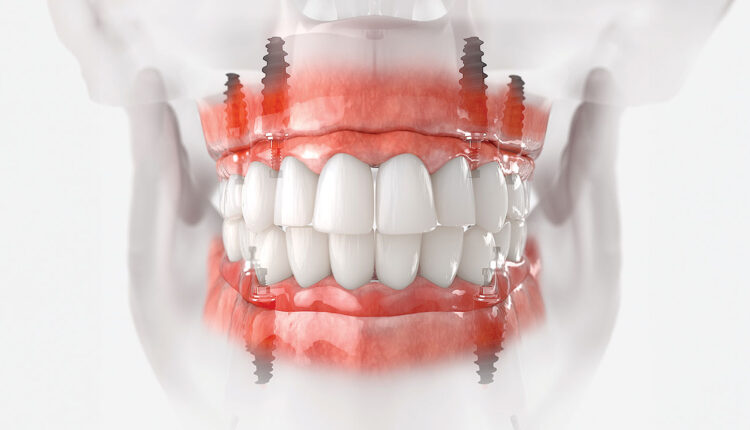
- Implant specification: manufacturer (Straumann or Nobel Biocare), model, diameter, length, site, torque achieved at placement, date placed, surgeon.
- Prosthetic specification: bridge material (monolithic zirconia, layered zirconia, or e.max), shade, occlusal scheme, retention mechanism (screw-retained or cemented), access-hole positions.
- Surgical notes: any bone grafting performed, sinus lifts, nerve lateralisation, flap design, suture material.
- Intraoperative and postoperative photographs.
- Final records: post-treatment OPG, post-treatment intraoral scans, occlusal records.
- Hygiene and maintenance protocol: recommended recall interval (six-monthly as standard), brush type (soft), interdental aids (Super Floss, soft picks, water flosser), specific contraindications (no ultrasonic scaler below the gum line on implant surfaces; use plastic or carbon-fibre scaler tips).
- Warranty terms and what is covered.
- Contact details for the Stunning Dentistry clinical team.
The document is available in English by default; Spanish-translated copies are provided for the Patient Summary and the hygiene-maintenance protocol section, which are the two documents your Spanish general dentist actually reads in detail. The full technical Clinical Summary remains in English because the clinical terminology is largely Latin-rooted and equivalent across both languages; Spanish prosthodontists uniformly report no issue with the English version.
2. The Digital Records USB
A small USB drive containing:
- Pre-treatment CBCT (DICOM format, openable in any standard dental CBCT viewer).
- Pre-treatment OPG (JPEG and DICOM).
- Pre-treatment intraoral scans (STL format).
- Post-treatment OPG.
- Post-treatment intraoral scans.
- Shade maps.
- Final photographs (front, lateral, occlusal views).
- A digital copy of the Clinical Summary PDF (English) and Patient Summary (Spanish).
Your home dentist can import any of these into their own practice management system.
3. The Patient Summary (for you, in Spanish)
A plain-Spanish 4-page summary covering:
- What was done (qué se hizo).
- What you should expect from your implants and bridges (qué esperar de los implantes y las prótesis).
- What routine care looks like (el cuidado de rutina: higiene diaria en casa y mantenimiento semestral).
- When to call your Spanish home dentist (síntomas específicos).
- When to call Stunning Dentistry directly (síntomas específicos).
- The warranty period and how to claim (el período de garantía y el proceso de reclamación).
You keep this in a safe place and reference it at every six-monthly recall.
Ready to discuss your options?
What we do before you get home
In the four weeks after your second visit (while you are flying home and settling back in), we:
1. Email your Spanish home dentist a pre-written introduction letter on clinic letterhead, introducing Stunning Dentistry, briefly summarising your treatment, attaching the Clinical Summary PDF, and inviting them to contact us with any questions. The introduction letter is available in Spanish on request.
2. Offer a 30-minute video consultation between your home dentist and your treating clinician at no cost to either party. About 34% of Spanish home dentists take us up on this; those who do almost always report it was useful. Conducted in Spanish if preferred.
3. Add your home dentist to our CPD newsletter (quarterly, covers updates in implantology and prosthetics; they can opt out at any time).
In 62 Spanish cases, zero home dentists have refused to take over maintenance after receiving the full handover pack. A small number (we estimate 8-10%) ask for an additional conversation with our clinician before they feel fully comfortable. We welcome those conversations and they take around 20 minutes.
Curious about costs and timelines?
The division of responsibility
The six-monthly maintenance over the decades ahead is a shared responsibility. This is the map:
| Activity | Your Spanish home dentist | Stunning Dentistry |
|---|---|---|
| Six-monthly prophylaxis / hygiene | Yes | No |
| Routine periodontal probing and charting | Yes | No |
| Routine radiographs (bitewings annually, OPG every 3 years) | Yes | Reviews if sent |
| Occlusal check and bite adjustment | Yes | Available if complex |
| Caries check on remaining natural teeth | Yes | No |
| Implant-specific radiograph review | Yes, shared with us | Yes |
| Screw-retained bridge removal for cleaning (every 2-3 years) | Yes, if trained | Yes, during SD visit |
| Minor chip repair on zirconia | Not typically (refer to us) | Yes |
| Bridge re-cementation (if cemented type) | Yes | Yes |
| Major prosthetic repair or replacement | No (refer to us, under warranty) | Yes |
| Implant complications (peri-implantitis, abutment issue) | Initial assessment, then refer to us | Yes |
| Emergency analgesia and stabilisation | Yes | N/A |
Want a personalised treatment plan?
If your Spanish home dentist is hesitant
Occasionally a Spanish dentist will be uncomfortable taking on maintenance of work done abroad. The reasons are usually one of:
- "No conozco este sistema de implantes", almost never true for Straumann or Nobel Biocare, which are among the most widely used systems in Spain; easily addressed with a 10-minute conversation.
- "Me preocupa la responsabilidad civil por trabajo que no he hecho", a reasonable concern. Spanish regulation under the Consejo General de Dentistas de España and the LOPS (Ley de Ordenación de las Profesiones Sanitarias) is clear: a dentist providing routine maintenance is not responsible for the original surgical or prosthetic work, provided they document what they inherited and what they did. A short letter from us to their indemnity insurer (Previsión Sanitaria Nacional, AMA Seguros, Mutual Médica, HNA) usually resolves this.
- "No hago mantenimiento de implantes rutinariamente", increasingly rare in Spanish general practice; most Spanish GDPs now do routine implant hygiene.
If you have spoken to your Spanish home dentist and they are hesitant, we have three routes:
1. We phone your home dentist directly. Dentist-to-dentist conversation resolves roughly 70% of hesitation cases.
2. We provide a named Spanish dental specialist in each major city who we have worked with on SD patients before and who is happy to take over maintenance. These are prosthodontists or oral surgeons who will liaise with your general dentist for routine hygiene while retaining overall responsibility for implant care.
3. We connect you with another SD patient in your autonomous community who can recommend their own Spanish home dentist. About 52% of Spanish cases after 2022 came via patient referral, which means we have a growing network of Spanish dentists who have quietly become informal SD referral partners.
In 62 cases, no Spanish patient has been left without a home dentist willing to continue their care.
Questions about this procedure?
What you should do
1. Schedule your first post-return Spanish dentist check within 30 days of flying home. Bring the Clinical Summary PDF (English) and the Patient Summary (Spanish). Invite them to keep the PDF on file.
2. Book your six-monthly maintenance at the first check so you have it in the calendar.
3. Use the home-care routine exactly as specified in the Patient Summary for the first six months. Implants don't need to be fussed over, but they do need correct hygiene.
4. Report anything unusual to your Spanish home dentist first, and to your Stunning Dentistry coordinator second. We expect to hear from roughly 18% of Spanish patients in the first year with a small question (usually reassurance about gum appearance or a minor occlusal niggle). That is what we are here for.
At Stunning Dentistry
The dentist we hand over to is the dentist who holds your care for the next thirty years.
Sources: Stunning Dentistry Clinical Summary template v4.2; Consejo General de Dentistas de España continuing care guidance 2024; Stunning Dentistry Spanish patient handover records 2021-2026; Ley de Ordenación de las Profesiones Sanitarias framework.
Ready to discuss your options?
Specialist-only treatment planning
- Remote file review before travel
- Evidence-led treatment checkpoints
No waiting list for eligible cases
- Remote file review before travel
- Evidence-led treatment checkpoints
Trip coordinated with care timeline
- Remote file review before travel
- Evidence-led treatment checkpoints
Our Partners










Why Us
See your new smile instantly!
This tool will help you understand potential structural and aesthetic changes before finalizing treatment decisions.