Zygomatic Implants in Spain, The Serious Answer to Severe Posterior Maxillary Atrophy
- A zygomatic implant is a long fixture, typically 30 to 55 mm in length, compared to the 10-13 mm of a standard implant, that anchors not in the jaw but in the zygomatic bone, the cheekbone that forms the lateral wall of your orbit and the lateral buttress of your upper face.
It was developed by the late Professor Per-Ingvar Brånemark, the same Swedish surgeon who gave modern implantology its foundation, and the protocol has been refined over four decades of published clinical evidence.



What a Zygomatic Implant Actually Is <a id="what-it-is"></a>
A zygomatic implant is a long fixture, typically 30 to 55 mm in length, compared to the 10-13 mm of a standard implant, that anchors not in the jaw but in the zygomatic bone, the cheekbone that forms the lateral wall of your orbit and the lateral buttress of your upper face. It was developed by the late Professor Per-Ingvar Brånemark, the same Swedish surgeon who gave modern implantology its foundation, and the protocol has been refined over four decades of published clinical evidence.
Zygomatic surgery is, however, serious surgery. It is performed under general anaesthesia or deep IV sedation with an anaesthetist present. It requires a surgeon who has trained specifically in the zygomatic protocol and who does it regularly. It is not appropriate for a generalist implant dentist.
Questions about this procedure?
The ZAGA Classification and Why It Matters <a id="zaga"></a>
In 2011, Dr. Carlos Aparicio published the Zygoma Anatomy-Guided Approach (ZAGA) classification, a five-type system that categorises the relationship between the zygomatic bone, the maxillary sinus, and the alveolar crest based on CBCT anatomy. This classification drives surgical decision-making.
- ZAGA Type 0: Concave alveolar process with a convex lateral maxillary wall. Intra-sinus trajectory standard.
- ZAGA Type I: Straight lateral wall. Intra-sinus or extra-sinus trajectory feasible.
- ZAGA Type II: Concave lateral wall. Extra-sinus trajectory often preferred.
- ZAGA Type III: Straight lateral wall with significant maxillary-zygoma prominence. Extra-sinus favoured; reduced sinus membrane disturbance.
- ZAGA Type IV: Severely concave lateral wall. Extra-sinus mandatory; intra-sinus would not anchor adequately.
Ready to discuss your options?
Three Variants: Classic, Quad, Hybrid <a id="three-variants"></a>
Depending on CBCT anatomy and the specific ZAGA type, three variants of zygomatic protocol are used.
Choice is made at planning based on CBCT. Dr. Ravi Sharma and Dr. Kiran Madhav make the call jointly; the patient signs off in writing.
Curious about costs and timelines?

Who Is and Is Not a Candidate <a id="candidates"></a>
You are likely a candidate for zygomatic if:
- You have severe bilateral posterior maxillary atrophy (under 4 mm residual bone)
- You have been quoted bilateral sinus lift plus staged implantation by your Spanish specialist and want to avoid 12-14 months of staged treatment
- Prior implant treatment has failed and you cannot tolerate more grafting
- You are systemically healthy enough for general anaesthesia or deep IV sedation
- You understand the nature of the surgery and accept its risk profile
- Active maxillary sinus pathology (sinusitis, polyps, significant mucosal thickening) is present, must be treated first
- Your zygoma bone itself is inadequate or atypical on CBCT (uncommon but documented)
- Severe medical comorbidities contraindicate anaesthesia
- Unilateral single-implant need, conventional implant is better
- Patient preference is specifically to preserve natural sinus anatomy even at cost of longer timeline
We decline roughly 10-12% of inbound zygomatic enquiries on medical or anatomical grounds, usually with an alternative plan (staged sinus lift + implants, or conventional All-on-6 with tilted posteriors only).
Want a personalised treatment plan?
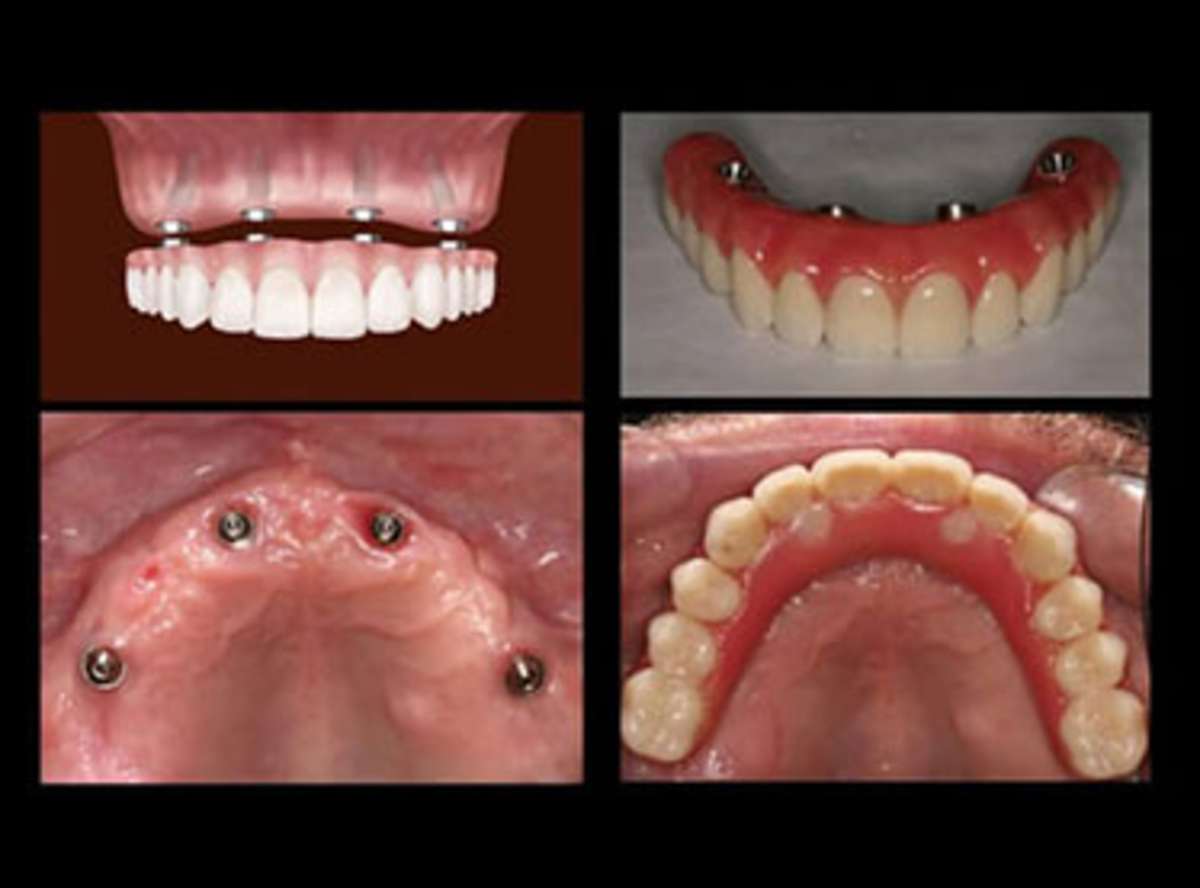
The Surgery: Step by Step <a id="step-by-step"></a>
Pre-op evaluation. Full CBCT with ZAGA classification. Medical clearance from Spanish GP and cardiologist if age >60. Planning meeting with the full team. Written informed consent.
Anaesthesia. General anaesthesia at partner hospital (AIG Gachibowli or Apollo Jubilee Hills) for quad zygomatic; deep IV sedation at in-clinic theatre for classic variant. Anaesthetist Dr. Neelima Shastri or her senior colleague.
Surgery Day.
Step 1. Full-thickness flap of the upper jaw, exposing the lateral maxillary wall and the zygomatic buttress.
Step 2. Osteotomy of the zygomatic bone via a small window in the lateral maxillary wall. Trajectory set by X-Guide dynamic navigation (see below).
Step 3. Progressive drill sequence through the zygoma bone under constant irrigation, tracked in real time by X-Guide.
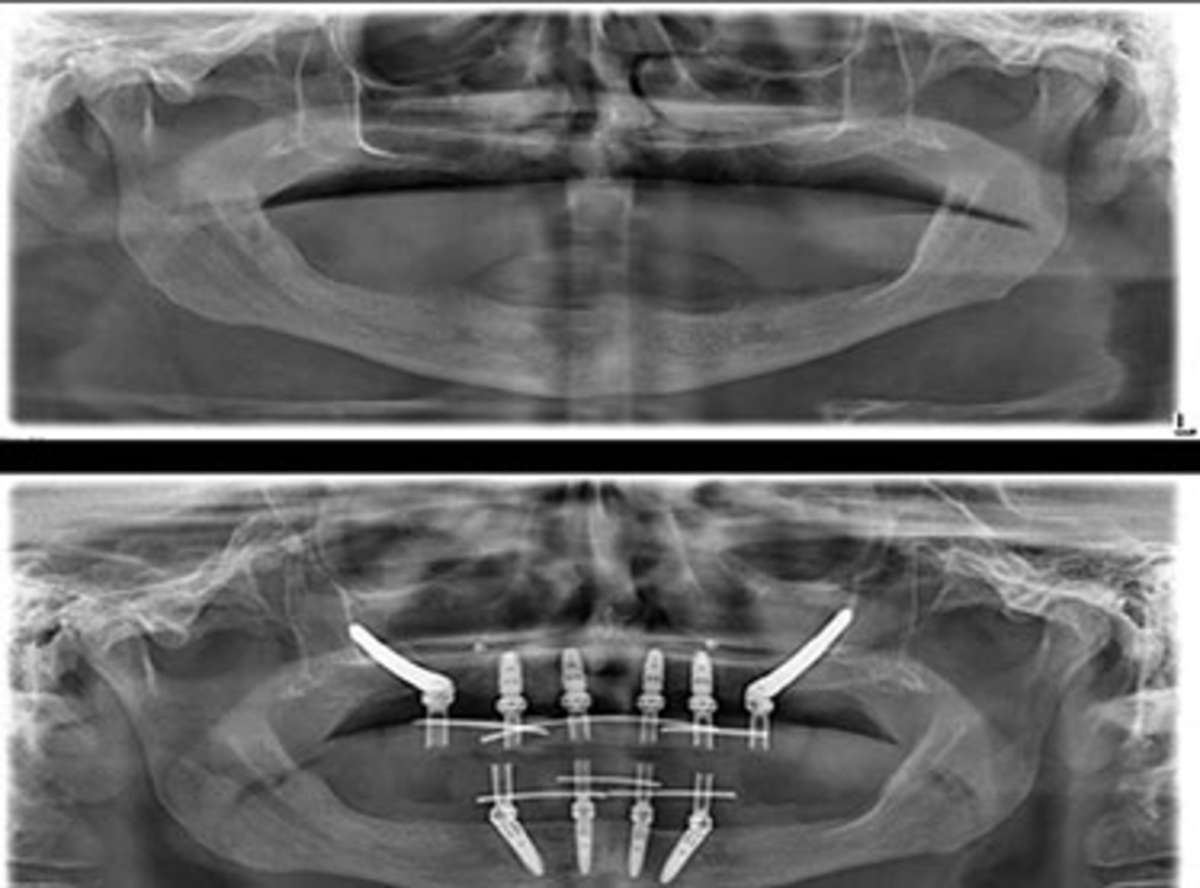
Step 4. Zygomatic fixture placed into the osteotomy. Torque checked (typically 45-60 Ncm, higher than standard implants due to dense zygomatic bone).
Step 5. Anterior conventional implants placed if the protocol is classic; skipped if quad.
Step 6. Flap repositioned and sutured with tension-free closure.
Step 7. Immediate milled PMMA provisional prosthesis fitted within 24 hours.
Post-op Day 1. Hospital-stay patient (quad cases) discharged; in-clinic sedation patients reviewed. Cold compress. Analgesics. Antibiotic cover for 10 days.
Days 2-7. Post-op reviews. Bite adjustment. Wound check.
Day 10-12. Cleared to fly home.
Month 4-6. Return trip for definitive monolithic zirconia prosthesis.
Questions about this procedure?
X-Guide and the Maló Digital Workflow <a id="x-guide-malo"></a>
Every zygomatic case at Stunning Dentistry is performed under X-Guide dynamic navigation with the Maló Digital Workflow planning protocol. No exceptions.
The Maló Digital Workflow is the planning framework developed by Dr. Paulo Maló's group for integrating CBCT, intraoral scan, prosthetic wax-up, and zygomatic trajectory into a unified digital plan. We use it as published and we credit the source.
Ready to discuss your options?
What This Costs in EUR <a id="cost-in-eur"></a>
Inclusive of: full diagnostic workup, X-Guide dynamic navigation, general anaesthesia or IV sedation at partner hospital, zygomatic fixtures (Straumann Zygomatic or Nobel Zygomatic), conventional anterior implants where used, PMMA provisional prosthesis, definitive monolithic zirconia, 10-12 hotel nights, airport transfers, 3 on-site post-op reviews, 12- and 24-month video follow-up.
Insurance for Spanish patients: Sanitas, Adeslas, DKV, Mapfre Salud, Asisa. Zygomatic is usually categorised as oral surgery + implant, with partial reimbursement depending on plan. Itemised receipts in EUR and INR plus Spanish clinical summary supplied.
| Zygomatic Item | Spanish Private-Specialist Quote (EUR) | Stunning Dentistry Fee (EUR) |
|---|---|---|
| Classic zygomatic (2 zygo + 2 conventional, single arch) | 32,000 – 55,000 | 18,000 – 26,000 |
| Quad zygomatic (4 zygomatic, no conventional) | 45,000 – 75,000 | 22,000 – 32,000 |
| Hybrid (unilateral zygomatic) | 22,000 – 38,000 | 13,500 – 19,000 |
| Bilateral zygomatic + full arch with zirconia definitive | 45,000 – 75,000 | 22,000 – 32,000 |
| X-Guide dynamic navigation | 3,000 – 5,500 itemised | Included |
| General anaesthesia and hospital theatre fees | 3,500 – 6,500 | Included |
| Definitive monolithic zirconia prosthesis | 9,000 – 15,000 | Included |
| Pre-op and post-op CBCT | 800 – 1,500 | Included |
Curious about costs and timelines?
For Spanish Patients: Recovery and the 10-Year View <a id="spanish-logistics"></a>
Trip length. 10-12 days for classic zygomatic; 12-14 for quad. Slightly longer than All-on-4/6 because of the more extensive surgery.
Year 10. Full reassessment. Published survival at this point: 96-98% for fixtures; prosthesis may be refreshed under warranty if wear/fracture has occurred.
Want a personalised treatment plan?
Evidence, Honest Risks, and Who Pays <a id="evidence-risks"></a>
Evidence base. Aparicio et al 2014 (10-year follow-up); Maló et al 2015 (extramaxillary approach); Davó et al 2018 (ZAGA review); Chrcanovic et al 2016 (systematic review). Cumulative fixture survival 96-98% at 10 years. Prosthesis survival similar.
- Sinus disease (post-op sinusitis): 3-6% published; our rate 3.2%. Managed with ENT co-management and antibiotics.
- Penetration into orbit or infratemporal fossa: under 0.3% in experienced hands, nearly always avoidable with X-Guide. Our rate zero across 2024-2025.
- Fistula between sinus and oral cavity: under 1%. Closed surgically if it occurs.
- Fixture failure: 2-4% at 10 years; addressed by replacement under warranty Category A or B.
- Prosthetic complications: framework fracture, screw loosening, pink composite chipping, same rates as All-on-4/6.
Warranty. Standard Stunning Dentistry distribution: Cat A 8.7%, B 2.4%, C 1.5%, D 0.3%. Escalation chain same as All-on-4/6 pathway, with the additional clinical review step routing through a zygomatic-specialist independent consultant in Barcelona or Milan for any zygomatic-specific claim.
Questions about this procedure?
Specialist-only treatment planning
- Remote file review before travel
- Evidence-led treatment checkpoints
No waiting list for eligible cases
- Remote file review before travel
- Evidence-led treatment checkpoints
Trip coordinated with care timeline
- Remote file review before travel
- Evidence-led treatment checkpoints
Our Partners





Why Us
See your new smile instantly!
This tool will help you understand potential structural and aesthetic changes before finalizing treatment decisions.